
 By
By 
In the world of interior design, the instinct for most people living in compact spaces is to push every piece of furniture firmly against the walls. The logic seems sound: by clearing the center of the room, you maximize the available floor area. However, this often results in a “waiting room” aesthetic that feels cramped, unimaginative, and strangely restrictive. The alternative is a design philosophy known as floating furniture. Floating refers to the practice of placing seating, tables, or storage units away from the perimeter of the room, allowing for air and movement to flow around the pieces.
While it may seem counterintuitive to take up central space in a small room, floating furniture actually creates an illusion of expansiveness. It breaks up the boxy feel of a square or rectangular room and defines specific functional zones. When executed correctly, these layouts transition a cluttered studio or small living room into a sophisticated, multi-functional sanctuary.
The Psychological Impact of Floating Furniture
Before diving into the technical layouts, it is important to understand why floating furniture works. When furniture is pushed against walls, the eye is immediately drawn to the boundaries of the room. You become acutely aware of exactly where the walls are, which reinforces the feeling of being enclosed.
By pulling a sofa or a desk even just six to twelve inches away from the wall, you create a shadow line and a sense of depth. This suggests that the room is large enough to “waste” a little bit of space, which tricks the brain into perceiving the area as more luxurious and open. Furthermore, floating furniture facilitates better traffic flow. Instead of walking through the middle of a conversation area to get to the kitchen or balcony, a floated layout creates dedicated pathways behind or around the seating.
Core Techniques for Floating Layouts
Successfully floating furniture in a small space requires a balance of scale, proportion, and purpose. Here are the primary techniques used by professional designers to master the floating look.
Defining Zones with Area Rugs
The most common mistake in a floating layout is letting the furniture look like it is simply drifting aimlessly in the sea of the floor. To prevent this, you must use an area rug to anchor the grouping. In a small room, the rug should be large enough so that at least the front legs of all floated seating pieces rest upon it. This creates a visual “island” that defines the living zone as a distinct entity from the dining or sleeping zones.
Utilizing the Back of the Sofa
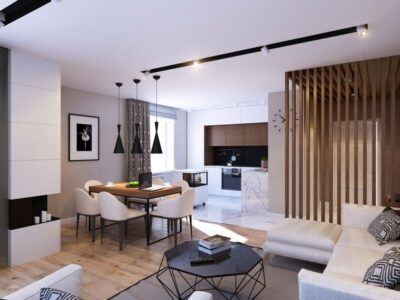
In an open-concept studio or a small living-dining combo, the back of a sofa is a powerful architectural tool. Instead of facing the sofa toward the wall, turn it so the back faces the entrance or the dining area. This creates a soft wall that divides the room without blocking light or sightlines. To make the back of a floated sofa look more intentional, consider placing a slim console table against it. This provides a surface for lamps, books, or drinks and hides the often-unattractive rear view of the upholstery.
Creating a Central Anchor
In tiny square rooms, a central anchor can be highly effective. This might involve placing four armchairs around a circular coffee table in the center of the room rather than using a bulky sofa. Because the chairs have a smaller footprint and are lower to the ground, they allow more light to pass through the space. This “campfire” arrangement is excellent for socializing and makes the room feel like a cozy lounge rather than a cramped apartment.
Advanced Placement Strategies
Once you understand the basics, you can experiment with more complex arrangements that address specific architectural challenges like awkward corners or poorly placed windows.
-
The Diagonal Float: If a room feels too “hallway-like,” try placing the furniture on a 45-degree angle. Floating a bed or a sofa diagonally cuts across the rigid lines of the room and creates longer sightlines. This is a bold move that can make a small room feel significantly wider.
-
The Window Buffer: Avoid the temptation to jam a desk or sofa directly against a window. By floating the piece a foot away, you allow curtains to hang properly and ensure that natural light can bounce off the floor and walls, which is essential for making a small space feel airy.
-
The Transparent Float: Use furniture with legs rather than “to-the-floor” bases. When you float a sofa on tapered legs or a glass coffee table, you can see the floor extending underneath the furniture. The more floor visibility you maintain, the larger the room appears to be.
Overcoming Common Small Room Obstacles
Floating furniture is not without its challenges, particularly regarding electronics and storage. However, these can be mitigated with a bit of planning.
Managing Power and Cables
One of the biggest deterrents to floating a desk or a sofa with built-in power is the sight of trailing cords. To solve this, utilize floor outlets if they are available. If not, run cables under the anchor rug to the nearest wall. There are also high-capacity battery packs designed for furniture that can be hidden under a sofa to power reclining features or lamps without needing a permanent tether to a wall socket.
Maximizing Vertical Space Behind Floated Pieces
Just because you have pulled your furniture away from the wall doesn’t mean the wall should go to waste. A floated layout leaves the wall surface free for floor-to-ceiling shelving or a large gallery wall. This separates the “functional” area (where you sit) from the “storage” area (the walls), which reduces the feeling of visual clutter pressing in on you while you relax.
Selection and Scale
The success of a floating layout depends heavily on the furniture you choose. In a small room, every inch counts.
-
Low Profiles: Choose furniture with a lower back height. This keeps the center of the room from feeling like a visual barricade.
-
Multi-Functional Pieces: An ottoman that serves as a coffee table, extra seating, and storage is ideal for a floated arrangement.
-
Rounded Edges: In tight spaces where you are walking around furniture, rounded coffee tables or curved sofas are safer and facilitate better movement than sharp corners.
FAQ
How do I stop my floated furniture from sliding on the floor?
The most effective way to secure floated pieces is to use high-quality rubberized furniture grippers or non-slip rug pads. Since the furniture is not braced against a wall, any weight shift could cause it to move. Placing the front legs on a heavy rug with a felt or rubber backing usually provides enough friction to keep everything in place.
What is the minimum amount of space needed for a walkway behind floated furniture?
For a comfortable pathway, you should aim for at least 30 to 36 inches of clearance. However, in very small rooms, you can get away with 24 inches if the walkway is not a primary thoroughfare. If you cannot maintain at least 24 inches, you may need to choose a smaller piece of furniture or reconsider the float.
Can I float a bed in a small bedroom?
Yes, floating a bed can be a great way to handle a bedroom with too many doors or windows. By placing the headboard against a low room divider or even just leaving a gap between the headboard and the wall, you can create a hotel-like suite feel. This also allows you to place nightstands in more flexible positions.
Does floating furniture work in a long, narrow “railroad” style room?
Floating is actually the best solution for narrow rooms. By creating a seating group in the center and leaving walkways on either side, you prevent the “bowling alley” effect where all furniture is lined up on one long wall. It breaks the length of the room into smaller, more manageable squares.
Will floating furniture make my room harder to clean?
In many ways, it makes it easier. When furniture is against the wall, dust bunnies and pet hair accumulate in the corners where you cannot reach. Floated furniture allows you to run a vacuum or mop entirely around and under the piece without having to move heavy items.
Should I float my TV stand as well?
Generally, it is best to keep the TV stand against a wall or integrated into a shelving unit to manage cables and maintain a clear viewing angle. However, if you use a swivel mount or a designer easel-style TV stand, you can float the television to act as a room divider between a sleeping and living area in a studio apartment.
Is it okay to float only one piece of furniture?
Absolutely. You do not have to float everything. Often, floating just the main sofa while keeping bookshelves and side tables against the walls provides the perfect balance of open floor space and structured design. Experiment by pulling one piece out and seeing how it changes the flow of the room.








Comments