
 By
By 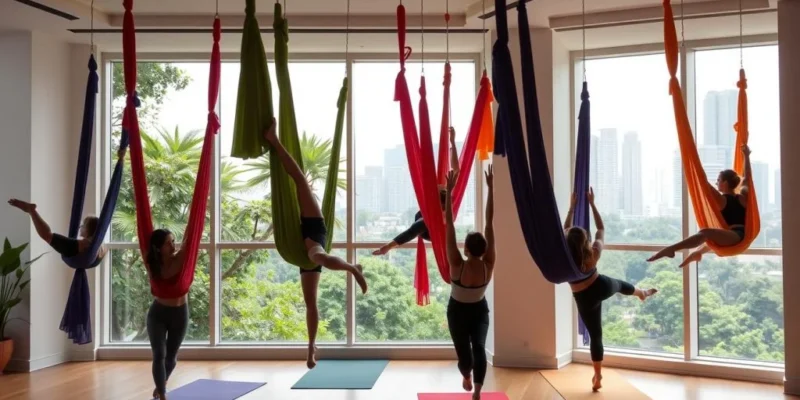
While traditional yoga continues to be revered for its timeless wisdom and deep-rooted philosophies, newer practices like aerial yoga have emerged as innovative adaptations that merge ancient principles with modern-day physical needs. Particularly in urban centres like Singapore—where space is limited and lifestyles are highly sedentary—aerial yoga offers an inventive way to deepen one’s practice while engaging both body and mind in fresh, invigorating ways.
Aerial yoga, also known as anti-gravity yoga, has quickly become more than just a fitness trend. It represents an evolutionary step forward—bringing together elements of traditional yoga, calisthenics, acrobatics, and rehabilitation science into a structured, accessible, and results-driven experience.
From Mats to Mid-Air: Why Aerial Yoga is Gaining Ground
The transition from floor-based yoga to suspended practice is more than just a shift in physical perspective—it reflects a broader movement towards wellness methods that are dynamic, engaging, and functional.
In Singapore, the high demand for low-impact but effective fitness routines has given rise to aerial yoga’s popularity. It appeals to individuals looking to build strength, improve flexibility, and reduce stress, all within a compact studio setting.
Key reasons aerial yoga is being embraced as a modern evolution of yoga include:
- Enhanced core activation through suspension
- Spinal decompression via supported inversions
- Increased engagement through fun, gravity-defying poses
- Heightened body awareness as every pose requires mindful control
Integrating Tradition with Innovation
Despite its modern flair, aerial yoga remains deeply rooted in traditional yogic values—such as breathwork (pranayama), focus (dharana), and mindful movement (asana). The difference lies in how these elements are experienced.
In a typical aerial yoga class, you’ll still move through familiar yoga poses like warrior, pigeon, or downward dog—but with the added challenge and support of a silk hammock. This creates new possibilities for exploration, especially for practitioners who may have plateaued in their mat-based routines.
How aerial yoga enhances traditional yoga principles:
- Deeper stretches: The hammock allows gravity to assist in lengthening muscles
- Greater alignment precision: The support encourages correct posture and balance
- Emotional freedom: Suspension offers a sense of release and openness not always accessible on the ground
The Science Behind the Shift
Incorporating suspension into yoga practice changes the biomechanics of movement. The body must stabilise in a three-dimensional space, activating smaller muscle groups and enhancing neuromuscular coordination. This makes aerial yoga highly effective for building functional strength—strength that applies to daily activities like climbing stairs, lifting, or maintaining posture at a desk.
Specific Physiological Advantages:
- Spinal relief: Inversions in the hammock allow the vertebrae to decompress, reducing tension in the lower back
- Improved circulation: Elevating the legs above the heart enhances blood flow and lymphatic drainage
- Enhanced joint mobility: The low-impact nature of suspension makes it easier to open stiff joints safely
- Muscle engagement: The instability of the hammock requires constant activation of the core, glutes, and stabilisers
These benefits align well with Singapore’s wellness-conscious demographic, especially among working adults and older individuals seeking effective, non-impactful fitness solutions.
Accessibility and Progression for All Levels
One of the hallmarks of aerial yoga as a modern discipline is its inclusivity. Unlike some fitness trends that cater to a specific age group or fitness level, aerial yoga is adaptable and customisable. Whether you’re a beginner with zero experience or a seasoned yogi looking for a new challenge, aerial yoga can meet you where you are.
Classes are often structured to include:
- Foundational skills: Getting familiar with the hammock and basic movements
- Progressive postures: Gradual introduction to inversions, backbends, and balancing poses
- Breath integration: Fostering mindfulness and nervous system regulation
With supportive guidance, even someone who’s never exercised before can build a consistent, empowering aerial yoga practice.
Studios such as Yoga Edition have embraced this inclusive philosophy, offering tiered classes that cater to different skill levels while maintaining the essence of yoga’s transformative power.
Mental & Emotional Transformation Through Elevation
The innovation of aerial yoga is not limited to the physical realm—it extends deeply into mental and emotional wellness. Being suspended in mid-air requires a degree of trust, vulnerability, and presence. It gently nudges you out of your comfort zone, fostering courage and self-confidence.
Moreover, aerial yoga offers a unique space for meditative reflection. The final relaxation, often experienced while cocooned inside the hammock, is both calming and grounding—a rare opportunity to disconnect from digital chaos and reconnect with oneself.
Mental benefits often observed include:
- Reduced stress and anxiety
- Improved sleep quality
- Boosted mood and emotional balance
- Enhanced mental clarity and focus
These outcomes are particularly relevant in Singapore’s high-stress environment, where mindfulness and mental resilience are becoming essential wellness goals.
A Cultural Shift in Movement and Wellness
As people in Singapore become increasingly aware of holistic wellness, there’s a noticeable shift towards movement practices that integrate mind, body, and emotional health. Aerial yoga fits this cultural evolution, offering:
- A space to slow down and reflect
- A novel yet rooted form of self-care
- A chance to rediscover movement as joy—not punishment
Whether practised after work, on weekends, or during a lunch break, aerial yoga brings back the playfulness that many adults have lost. It’s this mix of mindfulness, movement, and novelty that’s redefining how yoga is perceived and practised in the modern world.
Real-Life FAQ
Q: I’ve only done traditional yoga. Is aerial yoga really that different?
A: Yes and no. While the core principles are the same—breath, posture, and mindfulness—suspension in a hammock adds a new physical and mental dimension. It challenges stability and allows deeper engagement, especially in inversions and backbends.
Q: Do I need to be flexible or strong to try aerial yoga?
A: Not at all. Aerial yoga is suitable for all levels, and the hammock actually helps support your body through challenging poses. Flexibility and strength will develop over time.
Q: Can aerial yoga help if I’m bored with my regular fitness routine?
A: Absolutely. The novelty of moving in mid-air keeps things fresh and fun, helping to maintain motivation while still delivering a solid workout.
Q: Is there a risk of injury when practising aerial yoga?
A: When guided by trained professionals and practised correctly, aerial yoga is very safe. In fact, its low-impact nature often makes it safer than many high-intensity workouts.
Q: What makes aerial yoga a modern evolution of traditional yoga?
A: It blends classical yoga philosophy with modern movement science and innovative equipment, addressing contemporary needs such as posture correction, stress management, and functional strength—all in one holistic package.










Comments